What is transit oriented development TOD? is an article that defines it in academic and practice, and who invented it. The article shows the (when) reason to go to this type of development and when. In addition, it shows why the private sector or public sector approaches this type of development and what benefits it brings. Also, showing some examples from practice.
Transit-oriented development: definition.
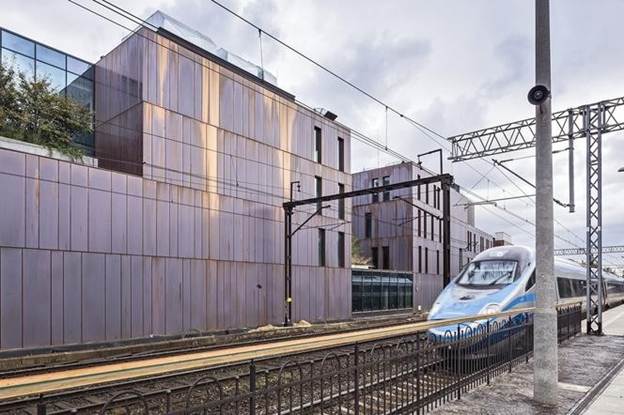
TOD is the strategy and approach of urban design and development to locate the development near mass transit stations to encourage inhabitants to use them and to reduce car use and reduce its negative impact on society, economy, and environment. See Figure 1, a link to transit TOD project in Romania.
Who invented TOD strategy and approach?
The term transit-oriented development was first coined by Peter Calthorpe and the formal framework in his book in 1993. The next American Metropolis ecology, community, and the American Dream. The developers and investors used this strategy and approach widely in their work. That specifically, in the USA context. Accordingly turned the public and specialist interest, and they studied it. The debate that arose around this strategy led to the formal invention of it, and a framework was built to use it.
When is transit-oriented development used?
Developers and investors in the world look into cost, demand, and opportunities for development and benefits. Some developer, social benefits of society, concerns them, and it’s the driver for development. Developers’ main concern in development is the cost of the development. TOD, due to its direct benefit of reducing the demand for car use and reducing car parks It’s an attraction.
If a development does not require car parks, then the road network and related infrastructure will be minimal. The cost of the development will be reduced heavily and making the development less costly. For that, many parts of the development cost of construction are reduced. That makes the development units affordable and increases the possibility of sales, rent, and usability.
Another factor is demand. Many occasional studies have been published about real estate demands, especially housing. In conjunction with the local plans and government policies for a future location of development, the developers move to initiate projects. Demand represents a driver for starting an urban development. Developers might steady and present other locations for development to fulfill the demand in the market.
Developers might occasionally look for opportunities for development and benefits. For example, a derelict agricultural land, and the cost of solving its problems does not cover the benefit of production. Or the land includes a continuous problem that makes it unusable. Another example, an industrial former area including deprived industries. These industries are dead in the market. Also, an owner who needs cash or funds for any reason might put his land for sale.
In these three examples, a developer will find an opportunity for land purchase at an affordable cost. A chance to fulfill the market demand for housing and other types of development. The affordable land price, proper location in the city, and fulfilling the market demand for a need drive the initiation of a development. In this manner, the developer can bargain with the authorities for development approvals to reach success.
Why transit-oriented development?
It is crucial to highlight the benefits are the use of transit a transit-oriented development strategy in transport planning. But before that, I need to highlight the concept of transit transport node in planning. The Transit Transport node is developed by a public body transport planning agency or a joint venture private sectors. It is developed for specific areas where an assessment of its need was conducted earlier. On top of the list is the population it serves and their availability in the area.
The transport transit node will define areas for further development. It increases access to the area for the majority of the community. This access creates several benefits. The increase in demand for housing in the area at all levels of property values. Also, the transport node increased property values and land prices. Finally, Several businesses will flourish nearby because of increased access. For example, restaurants, cafes, retail commercial stores, medical services, and businesses that provide services for the community.
It’s not the way around that transit-oriented development creates transit nodes. The location of the transit node and the benefits and needs it creates encourage this type of development. TOD also creates several benefits for the community. On top of the benefits is increasing the efficiency and benefits of public mass transit. It encourages the government to develop the transit in the area due to the increase in cash generated by the use of the public transit station.
In this way, the government will require less funding to develop the infrastructure and make the public transit network bigger and less costly. There is one major contradiction to the importance of TOD. Regardless of all the benefits it provides. Since it’s transit-oriented and transit nodes increase property and land prices when developed. Also, The Major factor and attraction for development is its cost, as mentioned earlier.
Accordingly, for many who do not have experience in urban development, land price is a major factor for developers to decide to start the development. For example, I worked on a mega development ( four towers in the Emirates). The developer purchased the land for 250 million DHS. The tower, a ground plus 30-story, estimated construction cost was 350 million DHS. And this development was not a transit-oriented development.
In this practice example, the land price comprises 40% of the total development cost. If this development were TOD, the land price would have been higher. And this is one of the contradictions of TOD in relation to its efficiency. TOD is not always a good strategy and approach for sustainable urban development.
TOD provides several benefits. On top of these benefits, achieving one of the requirements of sustainable urban development and green architecture. The decrease in car use and encouragement to use the public mass transit system, in addition to the following. Economic benefits like increasing and achieving economies of scale. The reduction of required public funds for building and developing a public transit network.
Social benefits include that TOD makes very high social cohesion. It’s a tool to provide social welfare and freedom of choice in living? And encourage democratic practice (vote). Environmental benefits include all sustainable urban development benefits of the environmental pillar. From the planning control and rules view, it creates changes. By locating a transit station in an area, the land use changes gradually to mixed-use to make the change affordable.
Transit-oriented development also encourages various businesses, Start as retail and commercial services, including grocery stores, household goods, laundry, saloon, dentist, restaurants, and others. This also creates changes to land uses and planning control and rules. Another benefit is learning from practice. Studying Tod projects represents a laboratory offering useful lessons for planners and developers.
In these developments, some things were working, while others were not. So the Interested party should steady them to make things work properly somewhere else.
[…] What is transit oriented development TOD? […]