Construction Management vs. Project Management article identifies the key differences between these two activities in practice, rather than theory. You can find many articles online that show the differences in brief links up1,2,3 . But these articles lack many realities in connection with the professional practice. I hear in this article will show experience and knowledge about the two from a project manager position, and head of the design department I held in my previous career.
Construction management Vs project management key differences include
The two activities in terms of various factors related to construction work. Such as the project cost and size, and the staff allocated to a project. Also, execution activities. Regardless of the types of projects. Whether this project is a building, infrastructure, healthcare, or recreational and leisure project. The decision-making within the project work and related positions. Communication as well of transferring data, information, and documents with the project execution staff. All these activities are processed by a construction manager and a project manager.
Construction management done by a construction manager involves the execution of all the project activities on the site. It includes looking after all types of work from foundations, superstructure, finishing, MEP work, and related authority approvals. These activities execution as per the project management plan. Construction management means managing and directing the execution of work and the team for daily work and inspections. In addition, it involves discussing with subcontractor’s daily matters related to the execution of work and the contract.
Project management involves what concerns the project manager of the execution matters. Project management focuses on reaching milestones successfully. Also, executing activities on time as per the project management plan. The construction manager informs the project manager of any work issues. That related to time delay, resources for execution, and subcontractors’ work. In addition, any related authority Approvals that are hindering the smooth work.
Project cost and size. Large-scale companies include in their staff to run multiple projects an operation, projects, project, and construction managers. While medium-scale companies involve a project manager and, in some cases, a construction manager. While the small companies involved a project manager to do dual roles (construction manager). These actually, in practice, depend on the cost and size of a project. A villa cost differs from a warehouse cost. A school project cost differs from a bunker project cost. And a multi-story building costs differ from a landscape project.
Let me set an example. I worked on a project at Abu Dhabi airport, whose total cost is 300 million Dhs, nearly $100 million. The execution staff salaries per month include 500000 Dhs. That costs the company 6 million Dhs yearly. If we do a simple calculation of its share of total costs, we get 2% of the total project cost. Another project, a 10-story residential building, cost 100 million Dhs, nearly $30 million. The staff here, if we use the first model, costs 2% percent, which means 2 million Dhs for staff. In reality, this project did not have a construction management team.
The project manager was doing a dual role in support of a senior civil engineer. This company, if we assume (in reality) that the project’s benefits are 15 to 20% of the total cost. Then the contractor gets 15 million Dhs, and the staff only consumes 2 million Dhs. That excludes their healthcare and other company payments. This company did not sacrifice this amount of money and keep a larger staff. A staff to consume all the benefits that if we consider that the company takes A lot of time to get an award of this kind of project. The company’s total yearly salaries for staff for this project reached 750 thousand Dhs.
Decision-making in construction management by the construction manager includes various matters related to daily work. Decide matters related to subcontractor work and activities. Documents, approvals of matters related to risk management, disputes, and change orders. Also, decisions related to changing the project management plan. In addition to matters related to employing staff and the releases.
For example, in a project I worked on, the company’s labor and staff were not sufficient to start an activity. The construction manager held a meeting with the project planner and all other MEP seniors to discuss involving a subcontractor. After an analysis of the project timeline, cost, and benefits, he decided to call a subcontractor and discuss the execution of the superstructure concrete work. He called me to meet him. He informed him that I will assist in authority approvals because of my experience, knowledge, and strong relationship with the project consultant. After initial agreement about the execution plan required by the company, he transferred all documents to the project manager with a report of all meetings.
The project manager met the subcontractor and discussed the execution plan of the superstructure and the contract cost. The project manager met with the construction manager, with the existence of project director for final approval and contract signature. In this manner, we see how, in practice, decision-making is shared by all managers related to execution. See Figure 1, the superstructure work of the subcontractor in this project.
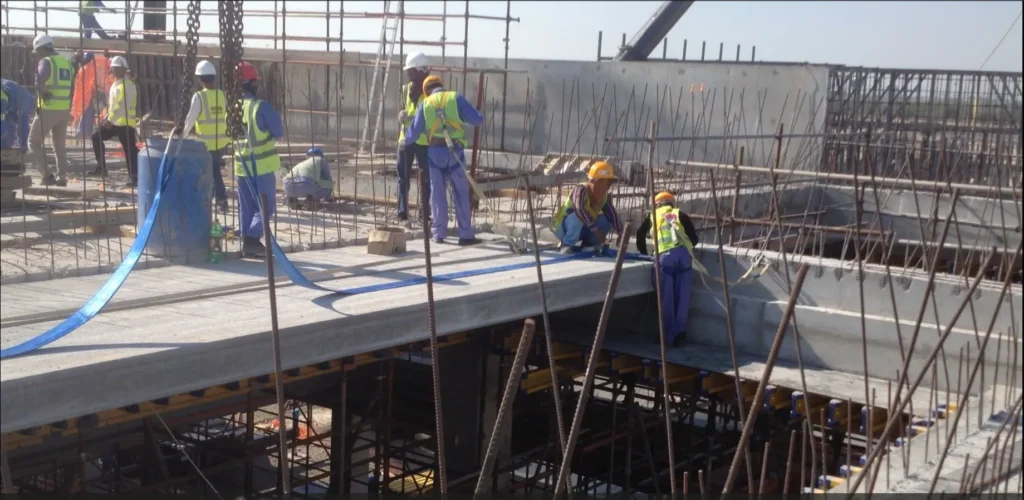
Project management involves by project manager’s decision-making related to many activities. First bidding for a project in terms of type, cost, and feasibility. Second, the number of staff, labor, and resources needed for the project. Third, assist the project planner in building the project management plan phases and activities. Fourth, decides the approval of the risk management plan and fund schedule. Fifth, take a decision about project change orders, changing planning activity, and any non-planned activity. Sixth, take a decision on the release and fire employees and salary increments. And finally, an authority approval submission related to construction, MEP, and civil defense approval.
Communication in construction plays a very critical role. This safeguards the proper execution of the project management plan and handover. It ensures the accuracy of data, information, and document transfer from one staff member to another. It includes several roles, understanding design and documents, staff roles, the decision-making process, and people’s psychology and behavior.
Construction management by a construction manager communicates with one high-level the project manager. Also, with lower-level engineers, architects, and staff on a daily basis. Involves direct communication with subcontractor project managers and engineers. In addition, it involves attending meetings at a management level and attending with the company client meetings when needed.
Project management by the project manager involves direct contact with lower-level management and staff. Direct contact with director-level staff and managers. Direct contact with the client and authority officials.
If you need more details about communication, you can read my article link.
Construction management in practice involves the initiation of the project management plan. Studying the project and its components in detail, and the required staff. The analysis of the project activities and how many resources and labor are required. Building the preliminary funds plan for all activities in the project. Then, with the project planner and project manager, build the final draft of the project management plan. After the project kick-off leads the staff, labor, and subcontractors to execute the project activities and coordinate with all disciplines in the project phases.
Project management in practice involves the paperwork of the project from initiation to handover. Managing the project team at work, managing the contracts administration. Also managing client relations and related authority. Coordination of all project disciplines at work for any issues, delays, disputes, and mitigating probable failures before they happen. Keeping the project on track in terms of budget and resources allocated to it.
Be First to Comment