What is a grain architecture? An article that identifies? Its roots, definition, and criteria. In addition, it illustrates why an architecture is green. The term roots in architecture practice, and why has green architecture appeared now?
The roots of green architecture
The green architecture appeared because of the growing concern of the environmental movement and the global energy crisis. In the 1960s, concepts emerged, and ecological or green architecture was introduced. A publication that increased environmental awareness, like Silent Spring 1962 by Racheal Carson. Also, the book design with nature in 1969 by Ian McHarg’s. These publications raise public attention to human intervention in nature and damage to ecological systems.
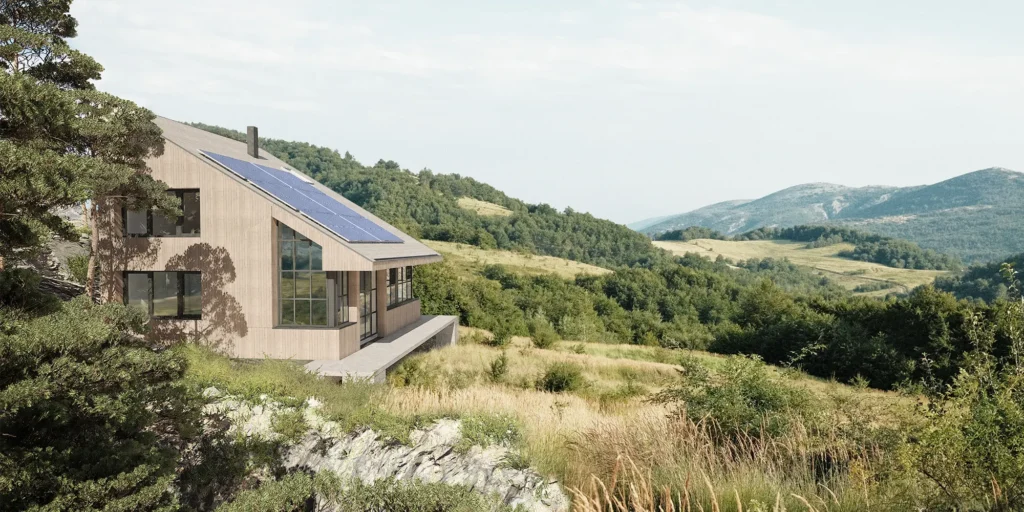
The energy crisis of 1973, OPEC oil, and the Reliance on fossil fuels. That turned attention to the diversion to use renewable energy resources. Such as solar and wind. The term sustainable development was coined in the Brundtland Commission report “Our Common Future in 1987” . See Figure 1, example of a housing project using a renewable energy source in Serbia.
Defining green architecture
Before we dive into defining green architecture, we need to know what is green architecture. Architecture is the art, science, and engineering of designing a physical environment component of any type that includes buildings of all kinds and housing. The art dimension includes incorporating art elements and principles in designing the building’s siting. Also, the plan layout and its relationships. The science dimension of it includes the use of materials and their specifications.
While the engineering dimension includes the architectural layout that provides maximum comfort. The architectural building design that fits the site and safety requirements. The structural system safety and durability in terms of materials and the system. MEP system design that fits the architecture and structural design.
Definition of green architecture
It is the type of architecture that responds to human needs, clients, users, and minimizes the building’s impact on the environment. On top of these are the client’s needs. Clients need affordable buildings that generate a reasonable income. Also, they need a building that does not need high maintenance spending. In addition, the minimum operation cost. In terms of aesthetics, they need an appealing form that enhances the city’s physical environment. As well as an attractive building for users to live in.
In addition to clients’ needs, fulfilling authority requirements. In the Gulf region, authorities put much of their concern on building safety. That is in terms of structural stability and fire protection. In one of the consultancy firms I worked with, I was leading a team of architects on a multi-story residential building. I met the structural engineer more than five times, and the authority approval took 2 months. The structural engineer changed the architectural design to fit his needs and the authority’s comments. For example, we had a floating column from the ground floor to the 10th floor. He informed we need to change the layout to remove this column.
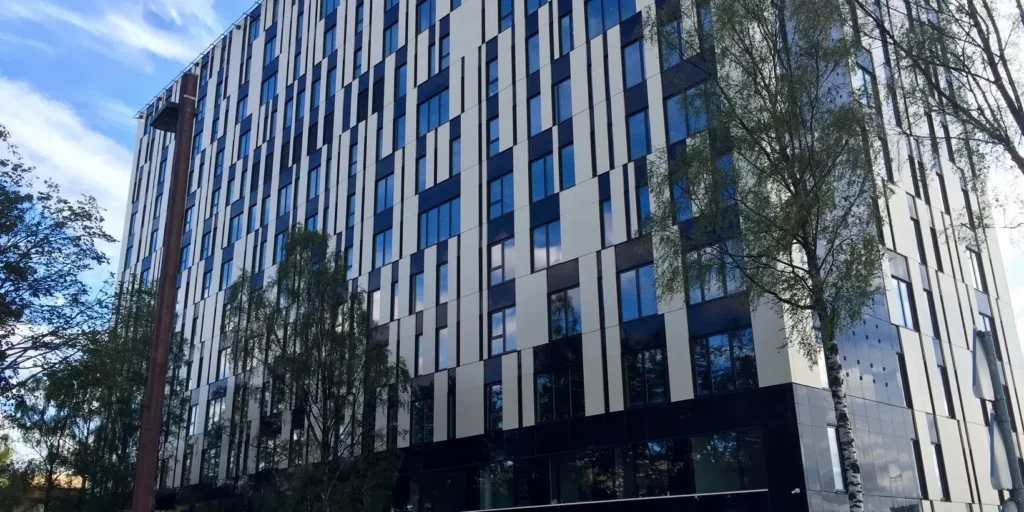
Fire safety as well takes a lot of authority attention. They apply NFPA rules and regulations for every type of building submitted to the municipality. Reasons for that are to protect the client’s project, remove their responsibility. And also reduce the load on the country’s insurance companies that provide compensation in case of fire. See Figure 2 , Green architecture building design in Estonia.
Users need from green architecture a building that provides comfortable living. First of all, the living spaces must be sufficient to do relevant space activity and comfortable movement. A space that provides psychological comfort for users. The users need sufficient daylight for comfortable eyesight and enough to use the space. Daylight also provides sunlight that affects health positively. For example, in the Emirates, the local rules, which are derived from the electrical light designing code a space must have a window that is 10-20% of its area. While the light code design indicates a minimum space of at least 8% of the window area. In providing light, the designer has to balance the heat transfer from outdoors through the window.
Airflow has two effects on users. Air flow provides proper ventilation for rooms and sanitary spaces. It increased the amount of O2 in the space required for the human body. The removal of bad smells and air outdoors without mixing with indoor air. The HVAC requires a number of air changes in the supply air to maintain healthy air in the space. Allowing users to gain air from outdoors will reduce the load on the HVAC system. That will reduce maintenance costs and increase the system’s life cycle.
Practice and profession have their limitations on design. Architectural design must adhere to architectural design Standards. Also, adhere to client design requirements. In this manner, the design will have some restrictions that an architect must overcome. Some countries, like the Gulf region, have built some standards based on architectural standards to fit the country’s needs. For example, every flat must not be less than 90 m² for a one-bedroom flat.
Professional requirements and regulations. Municipalities have also built their own rules to control building design. The use of materials that fit the country’s needs in terms of cost and environment. Such as using AAC blogs for the external walls. Building settings also must adhere to setback rules and services Corridors. For example, for buildings, a 20-foot setback from each side an architect must provide.
In addition, the building plot cover provides access to air and makes the ventilation easy. Some countries in the Gulf region for that provide rules for building plot coverage. For example, for buildings, between 60 to 75% of the plot area. In addition, the BUA built-up area, on the other hand, has its limitations on architectural design. Because of its connection to car park requirements and road design, there are limits. Normally, it’s the number multiplied by the plot area.
Green architecture minimizing the impact on the environment.
In practice, architects use techniques to reduce the impact on the environment. Designing the building orientation and location of windows properly increases daylight in the space. For that, it reduces the need for light fixtures and reduces their electrical consumption. This technique also assists in providing proper building views and increasing human well-being status. The more human contact an outdoor space visually it improves his psychology.
Ventilation and air flow (principles in architecture and MEP design) means the use of outdoor air for space Required air change per hour. That’s to maximize O2 in space and reduce the load on the HVAC system (Reduce electricity). Also, eliminate the need to install an extra fresh air supply system. The use of local materials that provide maximum protection to human space. That includes (HVAC + fire) to reduce costs and suppliers’ truck movement.
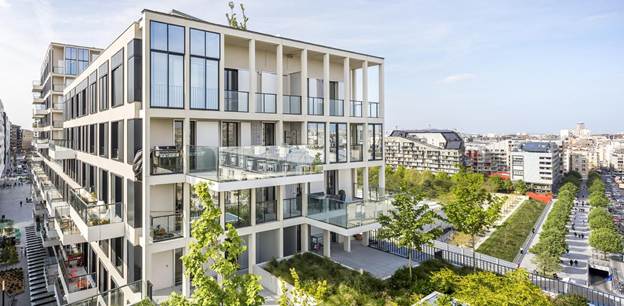
Finally, reduce the need for parking lots for several reasons. Protecting Virgin land due to its high cost. The parking lot Space increases the heat island effect. Making the building more beneficial due to the decrease in development area. Increase of green space to reduce CO2 in the space and its impact on health. Also, increase O2 and reduce CO2 volume outdoors. The use of low consumption water fixtures, electrical fixtures, and provide sewerage recycling system. See Figure 3, a green architecture project minimizing impact on the environment in France.
[…] What is green architecture? […]